Ten Frames and Dot Cards
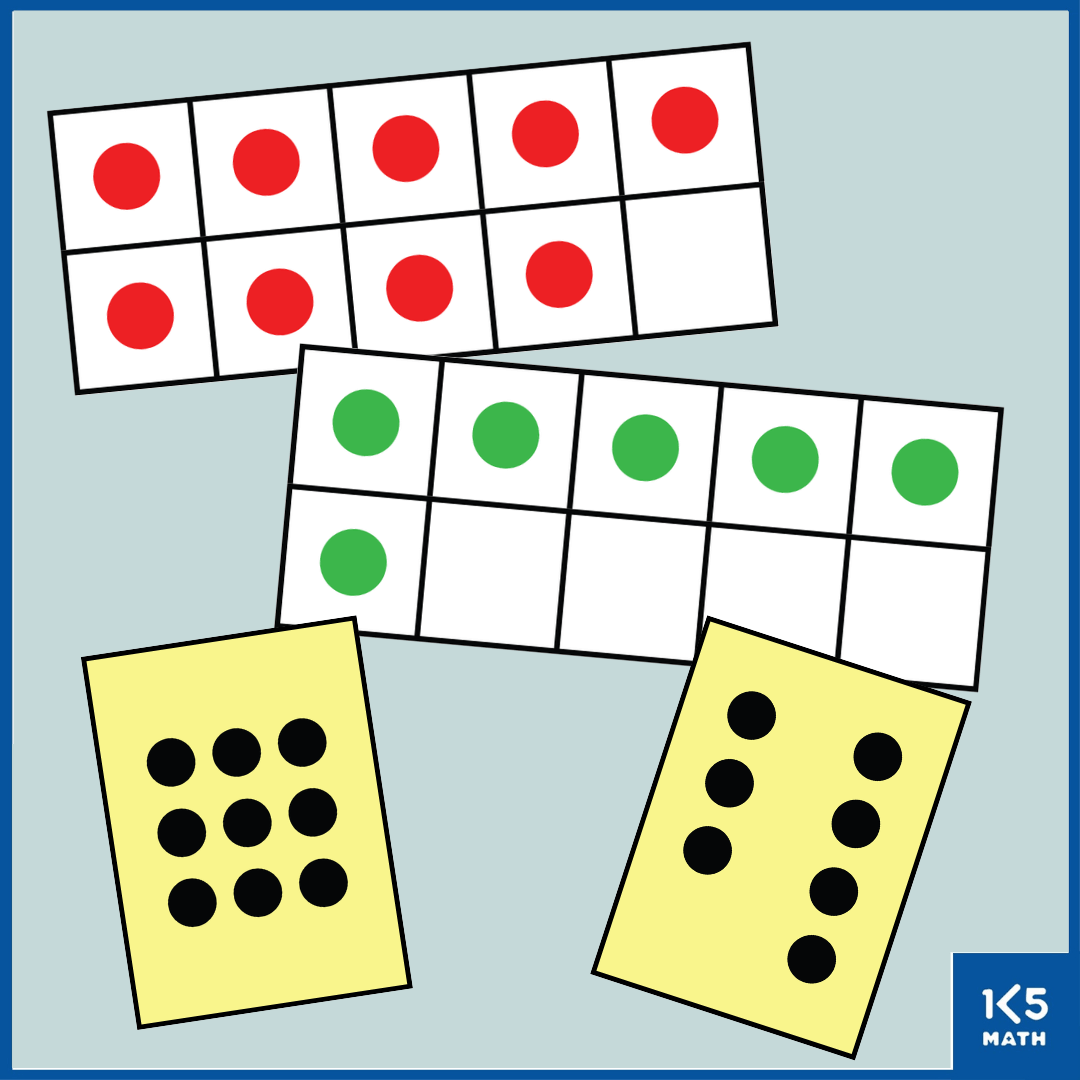
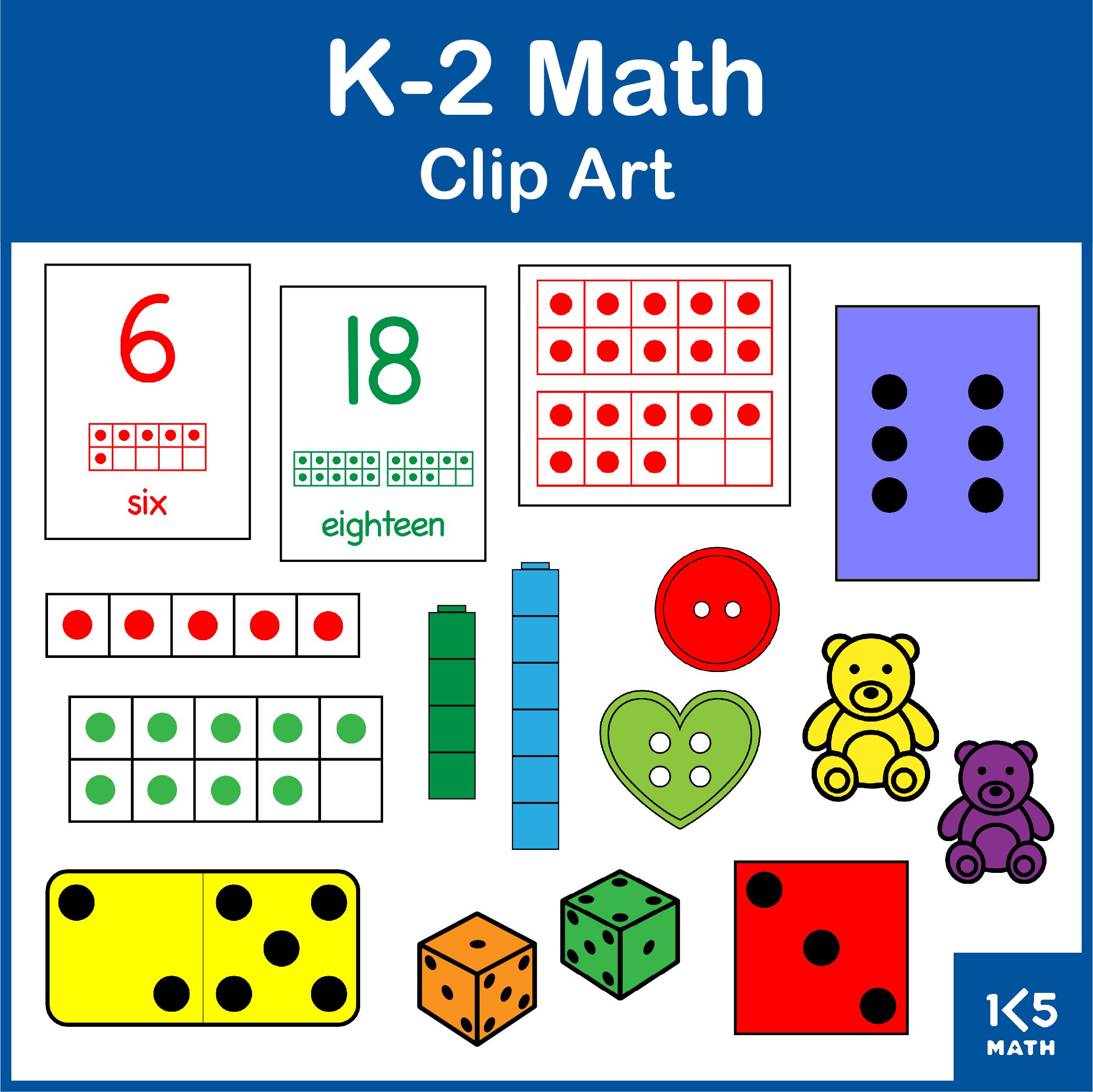
Ten frames and dot cards can be used to develop students’ subitizing skills, the ability to “instantly see how many”. This skill plays a fundamental role in the development of students’ understanding of number. Two types of subitizing exist. Perceptual subitizing is closest to the original definition of subitizing: recognizing a number without using other mathematical processes. For example, a child as young as two might “see 3” without using any learned mathematical knowledge. Conceptual subitizing is being used when a person sees an eight dot domino and recognizes the number pattern as a composite of parts and as a whole. For example, the domino may be seen as being composed of two groups of four and as “one eight" or as four groups of two.
Using Ten Frames and Dot Cards to Build Number Sense
Enlarged dot cards can be used during mental math sessions to prompt mental images of numbers and different mental strategies for manipulating these numbers. Activities with enlarged ten frames enable children to automatically think of numbers less than ten in terms of their relationship to ten, and to build a sound knowledge of the basic addition and subtraction facts for ten, which are an integral part of mental calculation.
Sample Activities:
💡Flash: Flash a dot or ten frame card briefly and have students write the number on a whiteboard. Using dry erase boards rather than having students say the number, ensures that all children attempt to respond and allows the teacher to assess class progress. When the response is oral, not all student responses are audible. Encourage students to share the different strategies used to find the total number of dots for cards, “How did you see it?” This can be varied by asking students to write the number and draw the pattern they saw, or by having them build the number flashed on their own blank frame.
💡Flash - One More: Once students are familiar with the basic patterns, and know them automatically, flash a 10 frame or dot card and ask them to name the number that is one more than the number flashed.
Variation: ask students to give the number that is two more/one less/double/ten more than the number flashed
💡I Wish I Had 10: Flash a dot card or ten frame showing 9 or less and say, “I wish I had 10”. Students respond with the part that is needed to make ten. The game can focus on a single whole, or the “wish I had” number can change each time.
Variation: teacher flashes card and students write the complement of ten on individual whiteboards with dry erase markers.
💡I Wish I Had 12: As above but students respond with how many more are needed to make twelve. Students should be confident in facts of 10 before this is attempted (e.g. to go from 8 to 12, they should realize they need 2 more to get to 10, then 2 more to 12. 2 and 2 is 4).
Variation: students draw an open number line on their whiteboards to show the two jumps used to get to the target number.
💡1 more/1 less/10 more/10 less
The following four prompts are written on the board in a list: one more, one less, ten more, ten less
The teacher flashes a dot or 10 frame card as the ‘starting number’. The first student selects one prompt. For example, if the teacher flashes a card showing ‘5’ the first student might say, “one more than 5 is 6”, the second student might say, “ten more than 6 is 16”, and the third student might say, “one less than 16 is 15”. Continue until all students have had a turn.
Sample Kindergarten Math Centers
Five Frame Flash
Five Frame Match
Five Frame Numeral Match
Five Frame Concentration
Make Ten on the Ten Frame (v. 1)
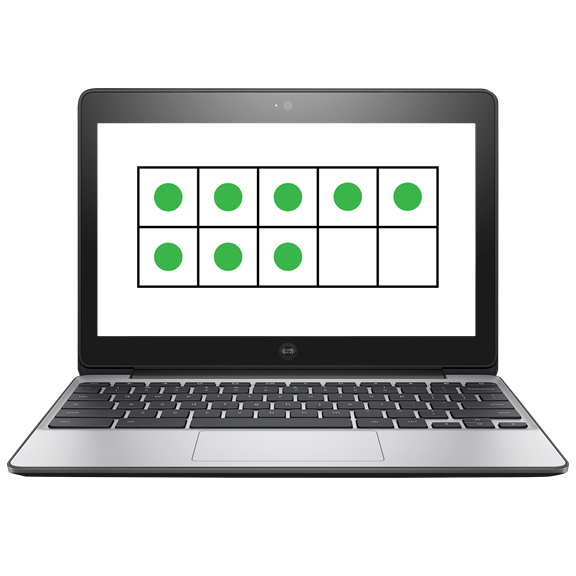
Looking for some digital images for subitizing 0 - 20? Help yourself to this FREE set of Google Slides with five frame, ten frame, dot card and rekenrek images.
Check out these student work samples showing students' written responses to Kindergarten Math Journal tasks using five frames, ten frames and dot cards.
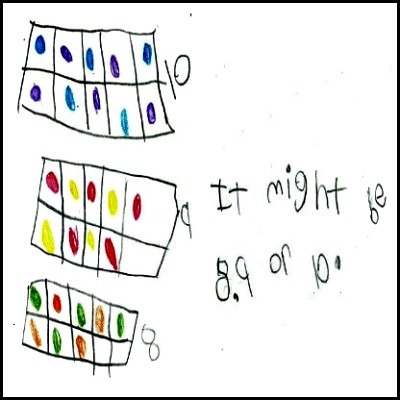
K Math Journal Task 36:
The number of counters on my ten frame is greater than 7. What might my ten frame look like?
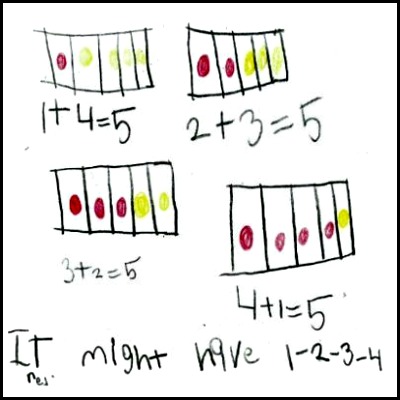
K Math Journal Task 75:
I put 5 counters on my five frame. Some were red and some were yellow. What might my five frame look like?
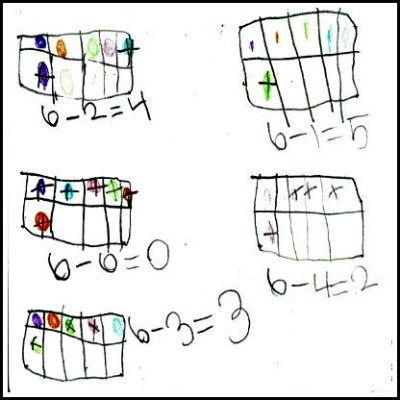
K Math Journal Task 56:
Put 6 counters on a ten frame. Roll an number cube and remove that many counters. How many counters are now on the ten frame? Record and repeat.
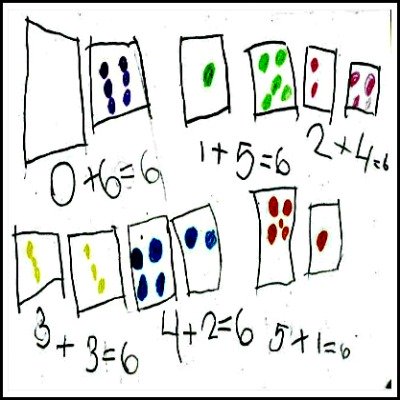
K Math Journal Task 76:
How many different ways can you make 6 using the dot cards? Record.